

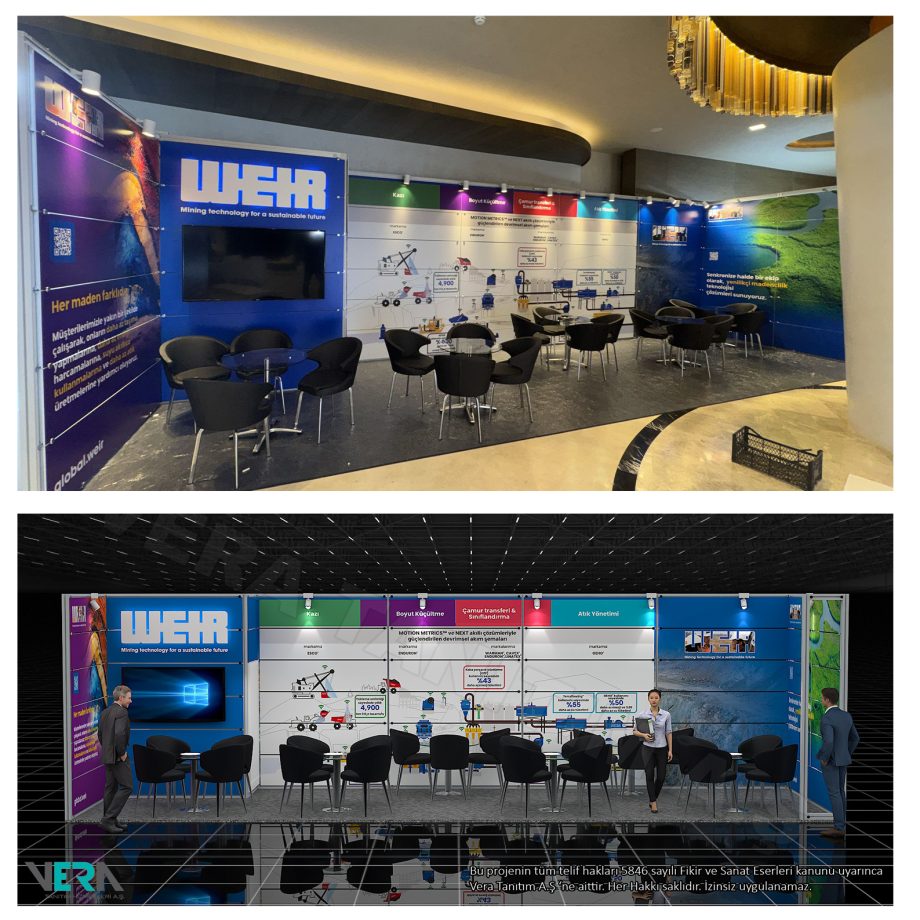
Reusable Pavilion Systems for COP31: A Cost-Efficient Approach
Cost-Efficient Pavilion Solutions for COP31 with Reusable Systems | VERA
Pavilion projects for international events are often evaluated based on design, visibility and visitor engagement. However, cost efficiency is equally important, especially when projects are expected to be repeated or adapted for future use.
For COP31, where timelines are fixed and production cycles are intensive, the way a pavilion is built directly affects both short-term budgets and long-term value. In this context, reusable pavilion systems for COP31 provide a more structured and cost-efficient alternative to traditional one-time builds.
Understanding the Cost Structure of Traditional Pavilion Builds
In conventional exhibition construction, most pavilion structures are designed and produced for a single event.
This typically includes:
- new material procurement
- custom production
- one-time installation
- dismantling and partial disposal
While this approach can deliver strong visual results, it often leads to repeated costs for each new event cycle. In many cases, similar production processes are repeated without creating long-term value.
Over time, this creates a cost structure that becomes difficult to optimize and control.
How Reusable Systems Improve Cost Efficiency
Reusable pavilion systems are designed to change this model.
Instead of producing a new structure for every event, the same system can be used multiple times with updated layouts, graphics and configurations. This reduces the need for repeated production and allows structural components to remain in use.
For reusable pavilion systems for COP31, this means:
- reduced material consumption
- lower production repetition
- fewer new components required
- more predictable budgeting
Rather than treating each project as a completely new build, the pavilion becomes a system that evolves over time.
Maxima Systems as a Cost-Control Framework
Maxima systems provide a practical foundation for cost-efficient pavilion construction.
Because they are based on modular aluminum profiles and standardized components, they allow structures to be assembled, dismantled and reconfigured without full re-production.
This creates several cost advantages:
- structural components are reused across multiple events
- production time is reduced for future projects
- transport planning becomes more efficient
- installation processes are more predictable
For COP31 projects, this level of predictability supports better cost control and helps reduce the risk of unexpected expenses.
Reducing Repetition in Production and Logistics
One of the most significant cost factors in pavilion construction is repetition.
Each new project often requires:
- new fabrication
- new logistics planning
- new installation preparation
Reusable pavilion systems for COP31 reduce this repetition by keeping the core structure in use. Only selected elements, such as graphic panels or branding components, are updated.
This approach not only reduces direct production costs but also simplifies operational planning.
Long-Term Value Beyond a Single Event
Cost efficiency should not be evaluated only within the scope of a single event.
For international exhibitions and recurring participation, the ability to reuse a pavilion structure creates long-term value. A system developed for COP31 can be adapted and used for future events with minimal adjustments.
For reusable pavilion systems for COP31, this creates a more sustainable financial model where costs are distributed across multiple uses rather than concentrated in a single project.
Balancing Cost, Quality and Flexibility
Reducing cost does not mean reducing quality.
Modular systems such as Maxima allow pavilions to maintain high design standards while controlling production and material usage. The structural system remains consistent, while visual elements can be customized for each event.
Cost efficiency, in this context, is achieved not by reducing quality, but by reducing repetition.
A More Controlled Budget Approach
For complex international events, budget control is closely linked to predictability.
Reusable systems provide a clearer cost structure because:
- major structural elements are already defined
- production variables are reduced
- installation processes follow known sequences
This allows project stakeholders to plan more accurately and reduces the likelihood of unexpected costs.
Conclusion
For COP31, pavilion construction requires not only visual impact but also financial and operational efficiency.
Traditional one-time builds often lead to repeated costs and limited long-term value. In contrast, reusable pavilion systems for COP31 offer a more structured and cost-efficient approach.
They reduce material waste, limit production repetition and support more predictable budgeting across multiple events.
Maxima-based modular systems provide a practical solution where cost efficiency, design quality and operational control are aligned.
VERA applies this approach to ensure that pavilion projects are not only delivered effectively, but also planned with long-term efficiency and consistency in mind.